Showing posts with label Employees. Show all posts

Thursday, September 6, 2018

Organizational Development-Toys R Us


When it comes to Toys r us going out of business I am happy, and I am sad, now coming from someone with a Masters in OD (Organizational Development) that must sound fairly “simple” and I admit it is. I am sad because a big part of my childhood and Americana is gone from the retail landscape. I still remember begging my mom to take 25 minutes into the suburbs to get the newest Universal Monsters action figures and playset. It was a place of wonder and imagination, in fact I still have one of those figures still.

But over the years a lot of the wonder and imagination Toys R US created faded, not because kids got involved in video games and the toy industry suffered. No, they sold video games at various Toys R US locations, and at any location you could find various adults spending their paychecks on not only video games but action (the collector’s type) figures as well.  The problems were more than that from expensive prices, lack of sales and advertisement, to even a lack of energy within the stores. Now these are off the top of my head, and I would not get into the condition of the packaging of anything I bought at (or nearly bought) Toys R US. Most of the items looked like they were used as footballs by store staff and with the attitudes they exhibited they truly must have.

I could say only there were only few other big chains that had as many disgruntled employees as Toys R US, but only a few. So, I am fairly happy that they have gone out of business because the company that went out of business in 2018 was destroying my recollections of the company that gave me and a lot of other children hours of fun with the products they sold years ago. Going by a model like Amazon the company could have rebounded if they would have made their stores “must see locations of wonder” they would have gotten bodies into their stores, along with their dollars. But none of that happened the company seemly filed bankruptcy and went about business as usual, then they had to close, duh.

I was not pleased with Toys R US when it closed but I was still happy. Much like that always-failing ex that you hear stories about how bad they are doing after you dumped them, you wonder where it all went wrong, or maybe it was always there and no one saw it coming. With Toys R US the “writing was on the wall” and the chain could not have ended their time in the retail marker any sooner. My hope is that all those employees can find jobs doing something that pays the bills or that they love to do. Meanwhile I also hope this opens up customers to those smaller online and mom and pop stores that did not get noticed before, with the shadows of the combined might of Toys R US, Walmart, Target and Amazon looming over them. With at least one of these mammoths gone there can be a chance for the little guys (smaller stores) to break through and take Toys R US’s place in the hearts of Americana.


Thursday, August 16, 2018

Organizational Development related post: MTBI and possible usage in the workplace.

During an Organizational Development class, it was asked about our take on the Meyer Briggs test within a corporate environment and during the class we needed to interact via an online discussion. Every once in a while, we have to pose questions to one another, in this post I have posted the question and my response to that question. I hope the interactions below assist in research, or even understanding the concepts of MTBI and what from some academic sense future practitioners think of these concepts and the arenas it can be used in.

Question: I have been an avid reader and fan of Carl Jung 's work. Over the years I have taken the Meyers-Briggs Test to satisfy my own personal curiosity and consistently I have been typed as INFJ.  I took the test recently and my result was personality type ENFJ. I attribute the change to work experiences that have forced me to be more extroverted. Do you think that an individual's personality type can change? Do you think the personalities of individuals can be adaptable to a workplace environment? How does the MBTI compare to other personality assessment tests administered to employees in the workplace?

It has been my experience that people do change aspects of their individual personality that they exhibit in the workplace. It is what I like to call a “workplace mask” in which individuals adapt (as you stated) or change their attitudes and responses to match certain instances or events. Usually I see this change in attitude is evident when managers or onsite directors are visited by out-of-town CEOs or COOs, they become positive and outgoing trying to interact with their employees, when otherwise they try to avoid those same employees at all costs.

To answer your question about administering personality tests at an organization, it has also been my experience that the organizations are not interested, whatsoever for understanding employee personality types. Organizations are more concerned for conformity to the culture that is present within the workplace, and any personality traits one exhibits that run counter to that culture must be eliminated or suppressed. A personality assessment test like MTBI is unfortunately not even on the radar for organizations like this.

Tuesday, August 14, 2018

Organizational Development article: The Learning Organization Revisited

As part of one assignment I had to read a Organizational Development themed article and comment upon it. This article was located on the Roosevelt University blog entitled: “The Learning Organization Revisited” I will post my response to the blog below, but I recommend reading the blog and maybe even commenting upon the article itself. Here is my posting which you will find also upon the site:

I like the idea of what respecting others in the workplace to create a learning environment, in my experience so far I have not seen any organization, department or team that meets or exhibits this type of thought process. Usually when it comes to stimulate any type of learning it is done by self-motivated employees or individuals from the training and development department, the managers play no part in the learning process. What managers can do, as mentioned in the video, for assisting employees contributing to the learning process are not instilled in the usual organizational culture and instead are thought of as characteristic of “weak” leadership. Giving a chance for employees to have a debate regarding ideas, policies and procedures even during “open house” discussions that I have seen, are just opportunities for managers to identify troublemakers or squash “challenges” to the current method of “doing things” in regular organizations.

Although I believe organizations that have this type of learning environment established, have managers who openly encourage innovation, and the dissemination of best practices will be highly productive and successful, I have not seen it yet. To do so most organizations need a change to their entire organization’s culture, to reverse the mindsets of CEOs and management staff included that believe creating supportive learning environment in which best practices can be shared and discussion of alternative points of view are not complete wastes of time. If the organization is serious about change, and the management staff is not it is in the best interest of the organization to move forward with personnel changes and recruit leaders who are to committed to this new environment.
I have taken the Learning Organization Survey as recommended by the authors of the article and my organization scaled highest score was in the area of “Time for reflection” at 48.6 I had five of these categories in averaging at 14.3% the others in the low twenties and thirties. This was far above what I expected to score for my organization but quite accurate in various areas.

Reference
Iverson, Kathleen (2012) “The Learning Organization Revisited” February 13, 2012 RU Training @ Roosevelt University in Chicago, Graduate Program in Training & Development, Roosevelt University Retrieved on April 5, 2017 from:
https://rutraining.org/2012/02/13/the-learning-organization-revisited/


Tuesday, July 3, 2018

Organizational Clarity: Human Performance Improvement -PDI Feedback

In another assignment in Human Performance Improvement class I was given the assignment to focus upon a creating change to a fictional organization (or part three) it focused upon the external stakeholders involved and how HPI can be used towards this group. Again, this is a fictional account with the details listed in an assignment and the parameters dealt with worst case scenario type issues in an organization so therefore with the idea of unlimited budgets and resources (I know when does that happens?) this assignment was crafted with those variables in mind. Please post any comments or questions to facilitate a discussion in the comments sections below.

Focusing on the Human Performance Technology (HPT) Model and building on the Cause Analysis mechanism, in the form of student surveys we build a foundation to gain an understanding of the environment factors which impact the team's and organization’s overall productivity. We also implement employee, management surveys to recreate the team spirit that is missing from the department. Therefore, using the HPT Model as the basis, we have selected five interventions for this project as defined in the Performance Support Tool 9.1:
  1. Personal Development Interventions (Feedback).
  2. Performance Support Interventions (Documentation and Standards)
  3. Organizational Design and Development Inventions (Empowerment-Team Strategies)
  4. Human Resource Development Interventions (Organization Growth-Management Development/Individual Growth-360-degree Appraisals).
  5. Organizational Design and Development (Organizational Values-Culture).
Of all the five interventions chosen, the number one intervention I deemed necessary to the success of this project is the Personal Development Interventions- Feedback. (Van Tiem, et al., 2012). This way team management The FA email team and site directors can discuss the issues of the Email backlog, low student survey score, lack of support, etc., in a collaborative manner. Done without fears of corrective action or further isolation occurring with the 360-degree feedback model (Hamilton, & Patel, 2012). This I feel is the easiest method to communicate solutions regarding the dysfunctional structure of procedures and processes that the organization’s customers are complaining about.  Since the organizational culture is embedded and the likelihood of a miraculous 360 change for the entire department or organization will not happen overnight.

I believe this is a more team oriented approach that allows all those concerned to gain an understanding how to improve their overall team performance and create an immediate but practical solution for productivity. This speedy intervention from an internal standpoint, allows immediate feedback and focus on the problem. From an external standpoint it immediately deals with issues that presently concern the student body. If we were to implement the other, protracted interventions first, the University would possibly face a major exodus of students as a result.

By administering a 360-degree survey the employees express their individual perceptions through the rating process of how the organization perceives them and their effectiveness in their job roles (Hazucha, et al,.1993). Included in that is how effective each individual perceives the impact of their coworkers and management staff this is all done anonymously so that the data is accurate as possible.

Coupled with the data gathered by the student surveys employees are then presented with all the material in a supportive atmosphere so that it facilitates effective coaching and development amongst the team members (Hamilton, & Patel, 2012). In this environment constructive feedback is shared between the employees and management staff so the performance responsibilities are clearly understood and the team’s performance can be improved. 360-degree feedback meetings and duplicate surveys are rescheduled for reinforcement purposes on a monthly basis are added to complement the original surveys and 360-degree meetings. This is done to judge the impact of the program upon the initial perceptions of the employees and what degree of change has occurred as a result.

Steps to administrating 360 Feedback Sessions
1.      Conduct Student Survey
2.      Gather Student Surveys
3.      Conduct Employee and Management Surveys
4.      Gather Employee and Management Surveys
5.      Tally all three surveys to rate the effectiveness of Management and Staff
6.      Constructive group feedback (through FA Jeopardy/team strategy meetings)
7.      Constructive individual feedback (through role playing/discussion of strengths and areas of development regarding performance)
8.      Monthly Follow up Surveys

My second choice was the Performance Support Intervention of Documentation and Standards, although I feel that employees need to be clear about the job requirements for their daily tasks, the Feedback intervention (360-degree feedback) would cover the basics of the intervention (Van Tiem, et al., 2012).  I would also add that the FA Email team overall customer service score on the student surveys was 63%, therefore one can concur the foundations for job expectations is already exists. Understanding why the performance gap happened and how to reach the desired performance in this situation could not be solved with just repeating current policies and procedures, to the employees.

Discussion for solutions for faulty procedures and policies as covered in the Feedback intervention would astern workable approaches to the enormous time sensitive problem that faces the team.
My third choice is the Organizational Design and Development Invention of Empowerment: Team Strategies again the basics of this intervention will be emphasized in the Feedback intervention (Van Tiem, et al., 2012). The problem here is that the FA email team is on an island by themselves, the organizational culture divides its departments into task oriented teams and by the type of Financial Aid knowledge needed to complete daily tasks. Included into the factors the strengthen this division are the competitive goals set by the organization which increases the negative effects that occur.

Stressing team exclusion is part of the organizational culture this problem is far-reaching to the point that there is a division between the FA email team and its management staff. The Beginning for the viable lines of communication with Feedback intervention starts the baby steps to becoming a true cohesive unit and meets the basic needs of all the stakeholders, now.

My fourth choice is Human Resource Development Interventions whether it is Organization Growth with Management Development or Individual Growth with 360-degree Appraisals the feedback approach is well and alive in both methods (Van Tiem, et al., 2012). In the 360-degree appraisals the customer surveys I have included in the Feedback intervention echoes here. However, there is no intent to “soften the blow” of the information given to the employee with the Organizational Culture that exists such an exercise would have a negative effect. This is due to the lack of knowledge that team management and FA site directors have of the expected job duties of the FA email team therefore without further information about these duties the ratings will be askew. The same holds true from the Management Development approach this is a lengthy approach that addresses the lack of interpersonal skills of the management staff, however due to time constraints training to bridge this lack of knowledge and personality is not suitable for this situation (Van Tiem, et al., 2012). The break between team management and the team itself is based on the lack of problem solving skills of management which this method adheres to solving. But an extensive needs assessment is required to fully understand that performance gap, something the organization is not willing to endure as the issues of low productivity numbers by the FA email team are affecting the rest or the organization.

To explain why my final choice is Organizational Design and Development, Organizational Values-Culture there is a realization that the Organizational culture is the initial cause for divisions in the department and the rest or the organization (Van Tiem, et al., 2012). This division is paralyzing the entire Organization to the point where simple restructuring of teams or the temporary assignment of employees to assist the FA email team is almost impossible. From a clinical and realistic standpoint, the organization needs to change entirely but not all of the stakeholders can wait for widespread modifications. As the survey data shows the student population is not elated with the University’s performance so far, and will not be patient. With any Organizational culture there is resistance to change for the organization to be successful in meeting the needs of its students it must have zero resistance to change. Therefore, the Feedback intervention is chosen to focus mainly upon the immediate team involved with this issue to get to the heart of the matter and work on creative solutions that address the issue at hand.
           
The best practices as demonstrated by the 360-degree feedback implementation at Starwood Hotels & Resorts Worldwide, Inc. would be replicated here at Omir University (Caruso, 2011). For example, in the survey process, Starwood decided that their survey questions would be adjusted or aimed at the skill levels of management, not just the employees. Furthermore, this process addressed individual strengths along with areas that still needed development, through positive assessments and not the usual one on one coaching methods, that have considerable negative conations. This way everyone can add into this data their unique perceptions of how they contribute to the organization, what they do best and what they believe they need improvement with on a daily basis, without judgment.
           
As at Starwood, the 360-degree feedback implemented at Omir University would give the entire team a structure or foundation of “what to focus on” the team’s knowledge of individual expectations so that bridging any performance gaps will be simple (Caruso, 2011). From an organizational standpoint, the benefits gained from these best practices is a foundation of data to grow upon. Additionally, from this data, the University’s Human Resource department can develop additional programs with a distinct scope that reaches into each part of the department. This extended reach allows the University to reduce the waste of previous resources similar to the implementation at Starwood (Caruso, 2011).

References
Caruso, Karen N. (2011)“Case Study: Starwood Hotels Takes 360 Degree Feedback to a New Level” viaPeople Insight - Performance Management & Succession Planning Blog Mon, Aug 29, 2011 ViaPeople Retrieved on February 23, 2017 from: http://web.viapeople.com/viaPeople-blog/bid/65018/Case-Study-Starwood-Hotels-Takes-360-Degree-Feedback-to-a-New-Level

Hamilton, Diane, & Patel, Nilesh (2012) “Best practices in 360-degree feedback” Forward HR Aug 22, 2012 In Business Madison Retrieved on February 16, 2017 from: http://www.ibmadison.com/Blogger/Forward-HR/August-2012/Best-practices-in-360-degree-feedback/

Hazucha, J. F., Hezlett, S. A., & Schneider, R. J. (1993). The impact of 360‐degree feedback on management skills development. Human Resource Management, 32(2‐3), 325-351.

Van Tiem, D., Moseley, J. L., & Dessinger, J. C. (2012). Fundamentals of performance improvement: Optimizing results through people, process, and organizations. John Wiley & Sons.

Thursday, June 21, 2018

Organizational Clarity: Personal Development Intervention

In one of my classes we discussed practicing HPI and what possible interventions one would personally choose when it comes to the workplace. Although I do not have the text connected to the blog you can still get the idea of the discussion and follow this quick entry onto one of my required discussion posts that helped me maintain my grades ha! Please post any comments or questions to facilitate a discussion in the comments sections below.

Directions: One of the most challenging aspects of HPI practice is accurately matching interventions to problems.  Chapter 9 (page 213) contains an intervention selection tool that lists a variety of interventions.  Choose at least one intervention from the list (more if you have time) and 1) Tell us when you would use the intervention AND when you would not use this intervention, 2) Provide a link to a website that either tells us more about the particular intervention or includes an example of the intervention, 3) Review the posts of fellow students and add your thoughts.

Post:
I believe I chose the Personal Development Intervention (PDI) Feedback or 360 degree (“meetings”) feedback for the assignment in the last module, so I will go with it once more. I like the idea of not critiquing an employee’s performance but telling them what they did right and giving constructive feedback on the areas or aspects in which they can improvement upon.

I can easily see when to use the PDI: Feedback during one on one training sessions or even during annual employee performance reviews. These are times or opportunities in which management or trainers are in the position to mentor employees, build morale and encourage teamwork with the organization in a positive manner. I would use this intervention only if the organizational culture fosters a positive environment however or if it is really necessary to bring certain issues or problems to light with a measure of depth and detail.

Although this intervention can be used in a group setting, if the issues concern only one member of the team or the problem must be discussed with various details I would not use this intervention. I can easy see in a group setting that focusing in too much, on a problem may cause even further divisions and problems on a team.

This is a link to a website called “What is 360 Degree Feedback?” from Custom Insight, that explains more about the Personal Development Intervention (PDI) Feedback intervention:
http://www.custominsight.com/360-degree-feedback/what-is-360-degree-feedback.asp

Tuesday, July 11, 2017

Organizational Clarity: “Top 5 Aspects to Consider Before E-learning Development” article

The CommlabIndia community is another group decided to easy, cheap solutions to meet an organizational needs within the various aspects of Organizational Development whether it is training sessions or meeting presentations. In this article: “Top 5 Aspects to Consider Before E-learning Development” which lists five important points considered important in knowing, or acknowledging before moving ahead with a new training program.
These are the five aspects that as a trainer or creator of an E-Learning program must consider in the development stages:

1. Readiness for online training

2. “Clearly defined” organizational training goals and objectives

3. Information and skill sets employees need 

4. Motivating factors to encourage employees

5. Provision of support to employees

To increase the ROI for the organization in regards to the training program, a proper measurement of it, and to increase the success of the training program. Understanding the motivating factors behind an organization's employees is a fundamental mantra in Organizational Development knowing what is important to employees can improve the way they achieve their overall professional goals (plus your training program).

If you want to know more just click the link here:
http://blog.commlabindia.com/elearning-development/elearning-development-aspects-to-consider

Tuesday, July 4, 2017

Organizational Clarity: The introverted personality at work

The crazy thing about the workplace is the various personalities involved and how to navigate them. Most of the time, there is a lot of back and forth, but sometimes it is just a one-way street. Now as funny as this sounds this could be for a litany of reasons, you can have Your introverted personality which is still cool, only harder to motivate or find out what motivates this person.

On the other hand, you may be dealing with an individual that is burnt out or maybe fallen out with the organization and any members that represent it. This person seems like the one that is so negative, you cannot reach or maybe is a waste of organizational resources. To me, out of the two, the latter is the easiest one to reach. Finding out that soft spot or place where the "honeymoon" ended with the organization can be easy as pie.

Whether there is a drop off in production after a certain event, ie: Performance appraisal, or being passed over for a promotion, all that data can is easily found in daily production reports or peer interviews. Hence, when it comes time to engage as an OD professional or as a Manager with employees of an organization there are timelines, measurable data and third-party confirmation to assist in this endeavor, in overcoming the walls of the "burnt out" employee.


Happy Fourth of July from Organizational Clarity!

Just a really quick Happy Fourth of July to everyone!  Hopefully, this is a day off for you, a time to regroup from the toils of your organization and the organizational development process as it is for me!
Tomorrow is another day, another opportunity to come back and face all the issues that challenge us and our organization.
So please enjoy today, the 4th of July that so many men and women gave (and are still giving) their lives for this country! That we may have the chance, the freedom to appreciate time with loved ones or even the opportunity to regroup, today by ourselves.
So from everyone here happy 4th of July!

Thursday, May 4, 2017

Organizational Clarity: “How to Deal With a Boss Who Judges You By the Company You Keep” article

Although I usually do not prescribe to some of the issues brought up in this article some of these arguments are valid. It is very often that upper management does lump employees in together, the whole “guilty by association” assessment is done far often than we care to admit (Boinott, 2017). This article does have some good points in keeping it professional at work and keeping co-workers at a distance, mainly because some of them you need to. There are many individuals who you can trust, and there are others you simply just cannot.
Then adding alcohol to the mix can redefine a situation in the worse way, things that are usually kept to oneself just slips out into the open and probably shared with others who will simply, in turn, share with upper management. I have dealt with co-workers who were usually the “devil’s advocate” for upper management and other misshapen factors that made the workplace unbearable and although I gave them a chance to connect I simply knew after a while to drop them as “good” friends. Meaning I kept everything with these individuals professional and usually let them get burnt by their own devices, in the same professional settings, while dodging them or leaving them out of personal events. 
Keeping away from certain individuals because of fears that you may be lumped into a wave of retribution from upper management, is maybe one great reason to stay professional at work. However, realize that these same individuals may do irreparable damage even outside of the workplace, becoming distractions to us from developing ourselves professionally and personally. In the end, as the article states it is best to know who these “distractions” are and maintain the proper relationship (whatever that may be) with them, i.e., one with distinct boundaries.
Boitnott, John (2017) “How to Deal With a Boss Who Judges You By the Company You Keep” February 21, 2017, Entrepreneur Media, Inc Retrieved from  https://www.entrepreneur.com/article/289367

Tuesday, April 18, 2017

Organizational Clarity: A wiki post called "Describe the ASTD HPI model"

So I wrote a couple of articles for a Human Performance Improvement class assignment that was a Wiki for the class and it was segmented into subject matter that dealt with organizational development and improving the human performance of the employees in the organization. I believe this will help students and professionals alike explain the concepts that deal with Human Performance improvement. This wiki posting is answering the question: Describe the ASTD HPI model. This is what I wrote for the class:
The ASTD HPI Model focuses on the Human Performance Improvement (HPI) professional during and after the intervention period. The ASTD HPI Model defines what the HPI professional’s role is, the outputs that are desired by the organization which they must deliver, and the ethical issues may they face during implementation. Plus, the ASTD HPI Model guides the Professional on how to assess individual stakeholder competencies and other various factors which can impact the HPI professional as they are trying to enhance human performance (Rothwell, 1999). The ASTD Model defines the roles for the HPI professional as it is divided into different stages: The Analyst, Intervention Specialist, the Change Manager and finally as the Evaluator (Rothwell, et al., 2012).
In each stage the HPI professional is gauging the performance gap identifying key issues that cause it (Analyst), then after identification, the best solution is chosen (Intervention Specialist) to narrow of fill the gap(s) in performance.  The HPI professional then as the change manager guides or leads the organization through the program implementation until that implementation has been completed as judged by the impact and whatever its result (negative or positive). Then the HPI professional as defined by the ASTD HPI Model reports the impact, the results and how the intervention(s) affected all the stakeholders involved.
This is an illustration of the ATD Human performance improvement model: http://static.wixstatic.com/media/c8752e_dba67a6bbd13457393eec87f8030051c.jpg_srz_522_331_85_22_0.50_1.20_0.00_jpg_srz
Keyword team (2017) “Human performance improvement Gallery” Retrieved on February 1st, 2017 from  http://keywordteam.net/gallery/99159.html
Rothwell, W. J. (1999). ASTD models for human performance improvement: Roles, competencies, and outputs. American Society for Training and Development.
Rothwell, W. J., Hohne, C. K., & King, S. B. (2012). Human performance improvement. Routledge.

Thursday, April 13, 2017

Organizational Clarity: A wiki post called "State the purpose and goals of HPI"

So I wrote a couple of articles for a Human Performance Improvement class assignment that was a Wiki for the class and it was segmented into subject matter that dealt with organizational development and improving the human performance of the employees in the organization. I believe this will help students and professionals alike explain the concepts that deal with Human Performance improvement. This wiki posting is answering the question: State the purpose and goals of HPI this is what I wrote for the class:
One of the main goals of Human Performance Improvement (HPI) is to bring clarity and definition to the organizational expectations of each assigned role within the organization (Standard, D. O. E., 2009). This ensures that individuals in the organization have the skills that are matched to tasks to guarantee completion, and it outlines individual responsibilities for each in the organization.
By assessing all of the aspects of an organization through HPI, the organization itself can develop policies and procedures that will improve and extend its range of competencies and productivity. HPI also strives to add transparency to the organization, not only for role clarity but to build morale through acknowledgment of individual achievements and acquired skill sets. Reinforcement of this acknowledgment through HPI is done by either creating proper compensation or reinforcing the needed consequences.
HPI creates an atmosphere of professional development that reinforces expectations, lowers turnovers and gives an organization the ability to retain experienced individuals. Meanwhile, HPI helps an organization in identifying opportunities to implement the changes necessary to strengthen the organization overall, pushing it forward by highlighting the necessary direction(s) to the next level.
Reference
Standard, D. O. E. (2009). Human performance improvement handbook volume 1: concepts and principles. US Department of Energy AREA HFAC Washington, DC, 20585.

Tuesday, April 11, 2017

Organizational Clarity: “Powerpoint: Color Blocks Template” free download

From the Articulate community is an article from easy, cheap solutions to meet organizational needs. In an email I received was a link to: “Powerpoint: Color Blocks Template” by Nicole Legault for a free download.
This Microsoft PowerPoint presentation download was made with the 2013 version of PowerPoint made up of five slides: One main slide and four additional slides. This would give any presentation to a sponsor or a group of learners an extra flair and organization that is usually needed to keep the flow going and help with explaining the subject matter properly.
It's a free download that has already had the font, organization, colors, etc., all done for you all you have to do is add text and personality, and viola! You will have a fantastic Microsoft PowerPoint presentation without that much effort expended while looking like an “expert” to everyone around you!
If you want to know more and download this PowerPoint just click the link here:

Thursday, April 6, 2017

Organizational Clarity: “Course Seat Time Estimator” free download

From the Articulate community is an article from easy, cheap solutions to meet organizational needs. In an email I received was a link to: “Course Seat Time Estimator” by Mike Schwind for a free download.
This a Project Management & Planning download which will help anyone in the Training and Development department with trying to figure out how long their participants, the learners will take to complete the program they have designed. This can be remarkable in trying to determine the number of resources needed to be applied to the program before the organization gives the final “green light” for approval. Even though by this point most organizations have given approval all programs are subject to retooling, and this spreadsheet is a great tool during that process as well.
If you want to know more and download this Spreadsheet just click the link here:

Organizational Clarity: "Confidential Survey" article

After reading this article about not completing the “confidential employee” survey, I realized although I have never been in a situation of having two dual entities warring to have me complete a survey to prove their points. I realized that whenever I was given a “confidential employee” survey, I did not complete it because I was always hounded (like the person in the article) to complete the survey. My question then was how confidential was it, if everyone and their mother knew I did not complete it?
I always wondered why organizations would use a “confidential” survey to create an illusion that this process is secret when is not. When a one-on-one with supervisors and their employees would, in fact, increase morale, improve human performance, and communication wherever the concentration existed. Creating this falsehood only disillusions the stakeholders of the organization and creates a breakdown of communication and trust. This is reaffirmed in the Forbes article listed below.
Add to that my studies within an Organizational Development program you start to understand when surveys such as this should be used and how unfortunately, it is not how most organizations use this tool. Instead of employee development and integrating employees into the organizational culture surveys are used to root out the “troublemakers” and to dissuade dissenting opinions or voices for needed change.
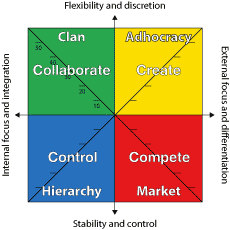
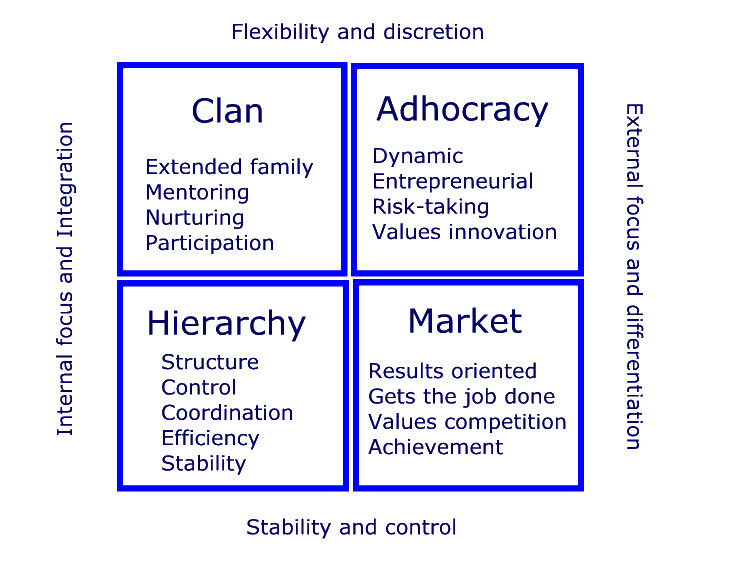
Rooting out these “troubled voices” in the eyes of the organization is cheaper and far easier than creating actual organizational change, than retraining managers and maintaining an atmosphere of cooperation. The hierarchy structure of most organizations is highly prized no matter how the organization states it is closer to the Clan structure characteristics with a “family” type atmosphere; no organization wants the inmates running the asylum. So there is no reason that any of us will see an end to these “confidential employee” surveys anytime soon.
This is the Forbes article which discusses how this gentleman will NOT participate in “confidential employee” surveys:
https://www.forbes.com/sites/lizryan/2017/02/21/no-i-wont-complete-the-confidential-employee-survey/#38020e856187


Thursday, March 30, 2017

Organizational Clarity: “Don’t Clap Throw Money Misadventures in Employee Engagement” article

As you see by my comment from February 10, 2017, had a definite opinion regarding Vince Cyboran’s article “Don’t Clap Throw Money Misadventures in Employee Engagement” on the Roosevelt University RU Training blog site.
“I have, at a past organization endure one of these “pep talks” experience mentioned in this blog and unfortunately, it only caused the morale of myself and my coworkers to go further south. The introduction of just the basic aspects from Frederick Herzberg’s Two-Factor–Model of Workplace Motivation could have changed, in my eyes, the entire organizational culture.
This post states that hygiene factors do not motivate employees but most of the organizations I have worked, believed that to motivate employees they had to offer free lunches or breakfast donuts, instead of offering raises or bonuses. The introductions of these initiatives were successful at first as most of the employees at the time thought that this was good as a reward they were going to get.
However, with a high turnover rate, there was a constant influx of new employees, plus there was a new hiring requirement in which employees needed a Bachelor’s degree to be hired. These new employees did not favor the idea of the hygiene factors being used as a substitution to monetary or professional motivation factors. Therefore, with these new employees these initiatives quickly failed, but every once in a while, management does fall back upon free lunches or breakfast donuts, as motivators.”
Unfortunately, this still occurs many times over in a lot of different organizations, what happens is that people lowered their expectations of what they desire and organizations go to the level to meet them. Usually because giving their employees with these lowered expectations is better for the organizational bottom line than anything else. Keeping an idea of your professional self-worth, keeping a positive point of view you may get more than what you deserve, and if you do not why should you accept what the organization deems is logical or worthy of you? Maybe that is not a place that you, at the end of the day, deserve to be.

Reference
Vince Cyboran (2015) “Don’t Clap Throw Money Misadventures in Employee Engagement” Roosevelt University February 16, 2015 Retrieved from:
https://rutraining.org/2015/02/16/dont-clap-throw-money-misadventures-in-employee-engagement/

Tuesday, February 28, 2017

Organizational Clarity: "How is your Culture Quotient?" article

This article by Marcella Bremer talks about the culture Quotient of an organization discussing the sensitive issue of diversity in the workplace. Emphasizing the need for Cultural competency that allows professionals to navigate the workplace environment with their co-workers without making waves or causing major HR issues. This way everyone involved can increase their awareness of other cultures, build morale and create a creative, collaborative environment.
If you want more information this brief article summarizes the point and need of a Culture Quotient in every organization just click on the link:
https://www.ocai-online.com/blog/How-is-your-Culture-Quotient?awt_l=lzhjiA&awt_m=3bCXosEPbWsRmh3

Thursday, February 16, 2017

Organizational Clarity: “5 Tips to Set Flawless Learning Objectives for eLearning Courses” article

From the CommlabIndia community is an article from easy, cheap solutions to meet organizational needs. In an email I received was a link to: “5 Tips to Set Flawless Learning Objectives for eLearning Courses” By Ashok Kumar K.  Learning objectives are always tough to create especially for the eLearning arena.
Most organizations do not have the resources to commit to E-Learning courses so when the practitioner has the chance, they have to do it right! Stating to the learners and one’s sponsors what one will learn from this presentation of material is crucial to maintain support and fan the learner’s desire to engage.  
The five tips to setting flawless learning objectives for eLearning Courses are:
  • Keep learning objectives specific
  • Keep learning objectives simple and concise
  • Say NO to ambiguity
  • Specify expected performance
  • Align assessments & activities with learning objectives
If you want to know more just click the link here:
http://blog.commlabindia.com/elearning-design/5-tips-to-set-elearning-learning-objectives

Thursday, January 26, 2017

Writing of the Blog Organization Clarity from an OD Perspective

For the posts on Organization Clarity, I usually do not have a straight forward plan or monthly schedule of what I am going to write about or when I will write about it. Everything is very fluid I write at my desktop, text content to my main email via phone and even hand write some of the posts with pen and paper (pad) the reason why I am posting this information is because as any Organizational Development professional can tell you nothing goes as planned. 
Life happens, family, holidays, school, work, etc., these all become or can become major deterrents to writing blogs or planning an effective training schedule for your organization. For example, we have all seen employees that had to reschedule mandatory training sessions from a prior time, separate from other employee sessions because of the reasons that I aforementioned.
So with this in mind, I try to keep as versatile and flexible as I can with anything I do, as should any Organizational Development professional should, when it comes to completing projects or working on continuous like this blog. So please remember to be flexible as possible and will be successfully in all you do.


Tuesday, January 24, 2017

Organizational Clarity: The OCAI assessment online

The OCAI assessment divides organizations into four primary structures or groups but most organizations are a mixture of these groups if you do the online questionnaire/assessment you will see the type you prefer or belong to currently.
This assessment is great to understanding where the average employee is and where they want to be. We all have preferences some based on cultural influences some based on professional goals or even experiences, this assessment gives you the insight to help one figure out the best fit for them.
So try it today: https://www.ocai-online.com/
Be careful comparing the results with fellow co-workers who also take the assessment it may lead to heavy debate or heavy eye rolling sessions as you may find out that you have more in common with your co-workers than you possibly want to acknowledge.


Thursday, January 19, 2017

Organizational Clarity: Transcultural Collaboration: are you Competent? | OCAI online article

This is a great article by Marcella Bremer from OCAI this article discusses Cultural difference, diversity and why it is important to collaborate within an Organization. It does mention a couple of classes you can take to further your education and get an online degree in regards to being Culturally Adaptive as a leader.  But the real deal here is the mention regarding cultural differences and the fact that it does impact organizations that are trying to reach out in to the global market. 
This is very important from the Organizational Development viewpoint as a Professional, understanding that an employee's culture does determine how they view their place in the organization and how the operate within it.

Click on the article about Transcultural Collaboration here:


  Transcultural Collaboration: are you Competent? | OCAI online